

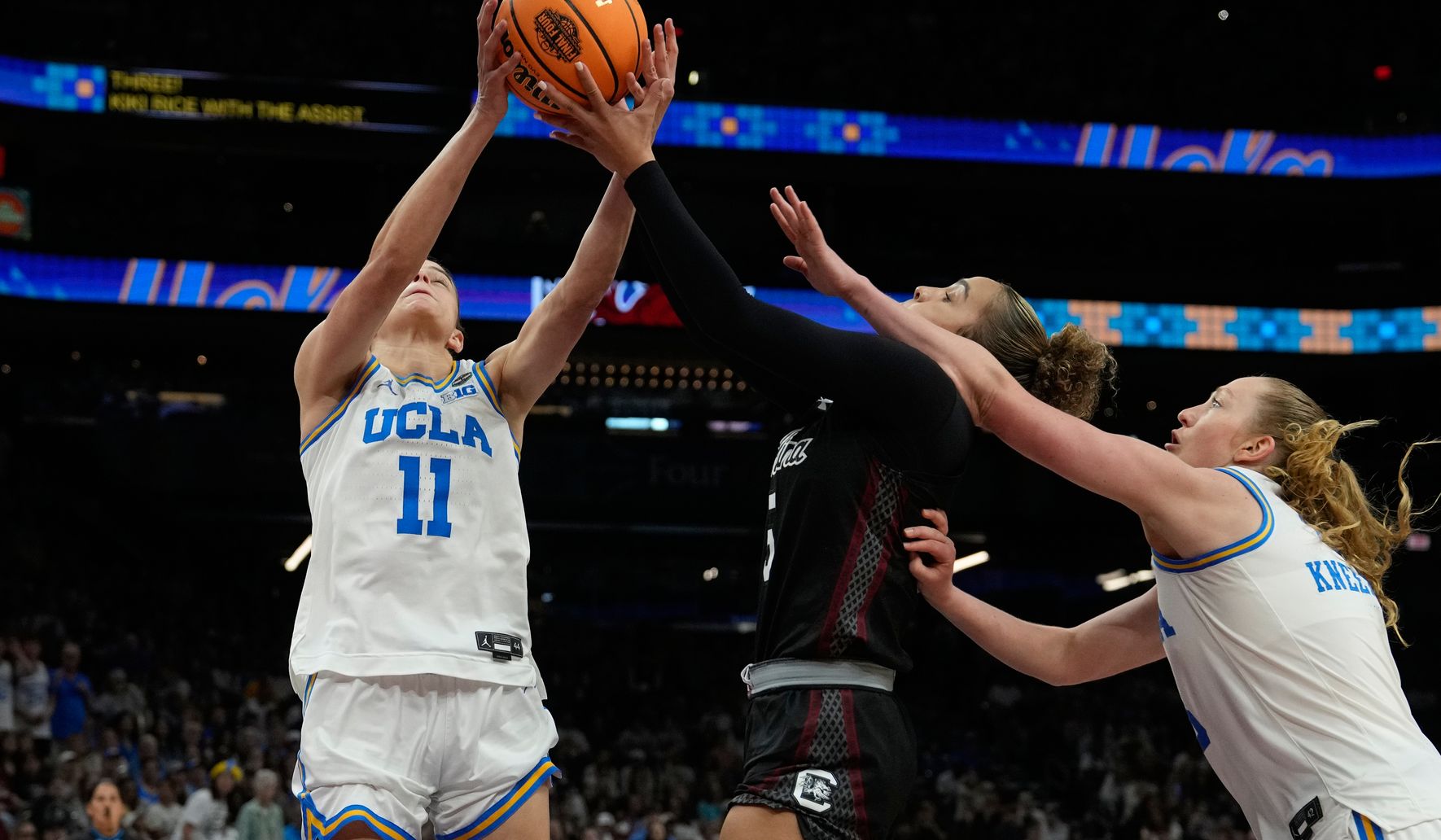
UCLA dominated the final, turning an early edge into a runaway victory that settles as a landmark moment for the program and a statement about balanced, disciplined team play.
The scoreboard told a clear story, but the way UCLA got there mattered as much as the final number. Their offense found rhythm, the defense stayed aggressive, and the roster showed depth that left South Carolina scrambling for answers. Fans watching saw a team that executed a complete game on both ends of the floor.
“Gabriela Jaquez scored 21 points, Lauren Betts added 16 and UCLA routed South Carolina 79-51 Sunday to win its first NCAA championship in women’s basketball.” That single line captures the headline, but the win had texture beyond the box score. The Bruins mixed inside scoring and perimeter pressure, forcing turnovers and turning defense into easy offense.
Much of the early drama evaporated as UCLA imposed its tempo and physicality. South Carolina, a program used to controlling games with size and depth, struggled to find consistent answers against the Bruins’ switching defense and quick ball movement. When the offense clicked, UCLA stretched the lead and took the wind out of the opponent’s sails.
Role players stepped up at pivotal moments, hitting shots and diving for loose balls that kept momentum on UCLA’s side. That kind of contribution matters in title games where the margin for error is small. The coaching staff left the team prepared, and the players delivered when it counted most.
The margin of victory was more than cosmetic; it reflected a level of composure not always seen in championship matchups. UCLA’s ball security and shot selection prevented South Carolina from snagging back control, and the Bruins converted enough chances to maintain and grow their lead. That balance between patience and aggression under pressure is a hallmark of championship teams.
Watching the game, it was clear UCLA set the tone early and refused to yield it. Their energy on the boards and in transition punished missed shots and forced the Gamecocks into hurried possessions. Over the course of the contest, those small advantages compounded into a decisive final score.
For the players, this title is validation of a season built on steadiness and teamwork rather than a single star carrying the load. Several players contributed at key stretches, and the rotation functioned like a well-oiled unit. That makes the achievement feel earned and sustainable, not the result of a lucky night.
The coaching approach emphasized fundamentals, effort and situational discipline, and those elements shone through when the pressure rose. Game plans adjusted on the fly and the team executed cleanly, which is the kind of blueprint other programs will study. Winning a championship often comes down to preparation and attention to details that show up in the final minutes.
Beyond the trophy, this victory gives UCLA momentum and credibility that will echo into recruiting cycles and future seasons. The program now holds a national title that proves it can win on the biggest stage. That changes narratives and expectations in ways that matter for years.
The spectacle of a championship game is filled with emotion, but the lasting takeaway should be the discipline and teamwork that produced the result. UCLA’s players and staff built a performance that was decisive and comprehensive, leaving little room for dispute about who deserved the crown. It was a clean, convincing finish to a season that the Bruins will remember for a long time.

