

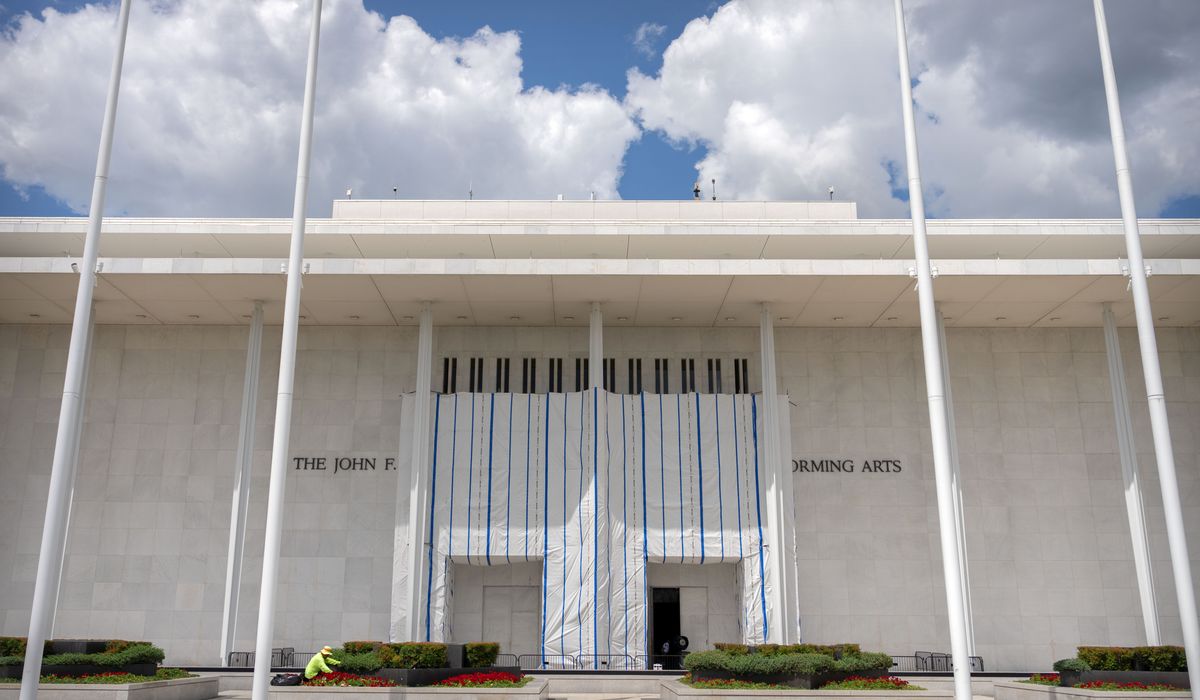
A vote has attached President Trump’s name to the Kennedy Center, again, and it has stirred a sharp mix of pride, pushback, and cultural arguments about legacy and leadership.
The decision to tie President Trump’s name to the Kennedy Center landed with predictable force: supporters see it as overdue recognition of a president who prioritized American culture, while opponents cast it as politicizing a national arts institution. That split speaks to a larger debate about who gets to define public memory and how political life intersects with cultural landmarks. For many conservatives, the vote represents a clear defense of honoring achievements without yielding to partisan erasure.
Backers framed the move as a rightful acknowledgment of major support and funding for the arts during Trump’s administration, arguing the gesture cements real contributions rather than mere rhetoric. They stress that naming decisions should reflect tangible impact, not the mood of a shifting news cycle. From this angle, attaching his name is both symbolic and practical: it signals a lasting footprint on national culture and federal support for performance venues.
Critics counter that the Kennedy Center should remain above daily politics and serve as neutral ground for artistic expression. They worry that attaching a contemporary president’s name risks turning venues into political props rather than civic commons. That concern is genuine, but supporters retort that historical naming has always included political judgment calls and that conservative voices have been sidelined in similar debates.
Republicans who favor the move argue that conservatives have been too quick to concede cultural ground and that reclaiming symbolic spaces is a necessary part of balancing national narratives. They see the vote as a strategic pushback against a cultural elite that has often favored one set of voices over another. In practical terms, securing recognition can encourage more patrons and artists who feel overlooked to engage with the center on their terms.
The controversy also highlights how public institutions navigate legacy and leadership in polarized times. Naming a major arts center after a sitting or recent president is never neutral, but neither is leaving contributions unrecognized. The vote shines a light on procedural questions too, like whether such designations should reflect long historical consensus or respond more quickly to recent policy impacts.
For the broader Republican argument, this moment is about principle as much as prestige: standing up for the idea that conservative achievements deserve the same public respect others receive. That posture is less about personality and more about preserving a fair space for multiple interpretations of American culture. It is also an attempt to normalize the presence of conservative legacies in institutions long seen as left-leaning.
Observers note that these battles over names and plaques are often a proxy for larger fights over education, funding, and who gets a hearing in national conversations. When one side controls symbolic spaces, it shapes what the public perceives as mainstream or acceptable. Conversely, when both sides win occasional cultural victories, the public square can reflect a wider range of stories and values.
Those on the losing side will likely use the episode to rally their base and press for other counters, while supporters will treat the vote as proof positive that conservative ideas can and should be enshrined in public life. Either way, the decision will reverberate beyond the Kennedy Center itself, influencing how future naming decisions are debated and decided. Politics and culture are entangled, and this vote makes that connection unmistakably clear.

