

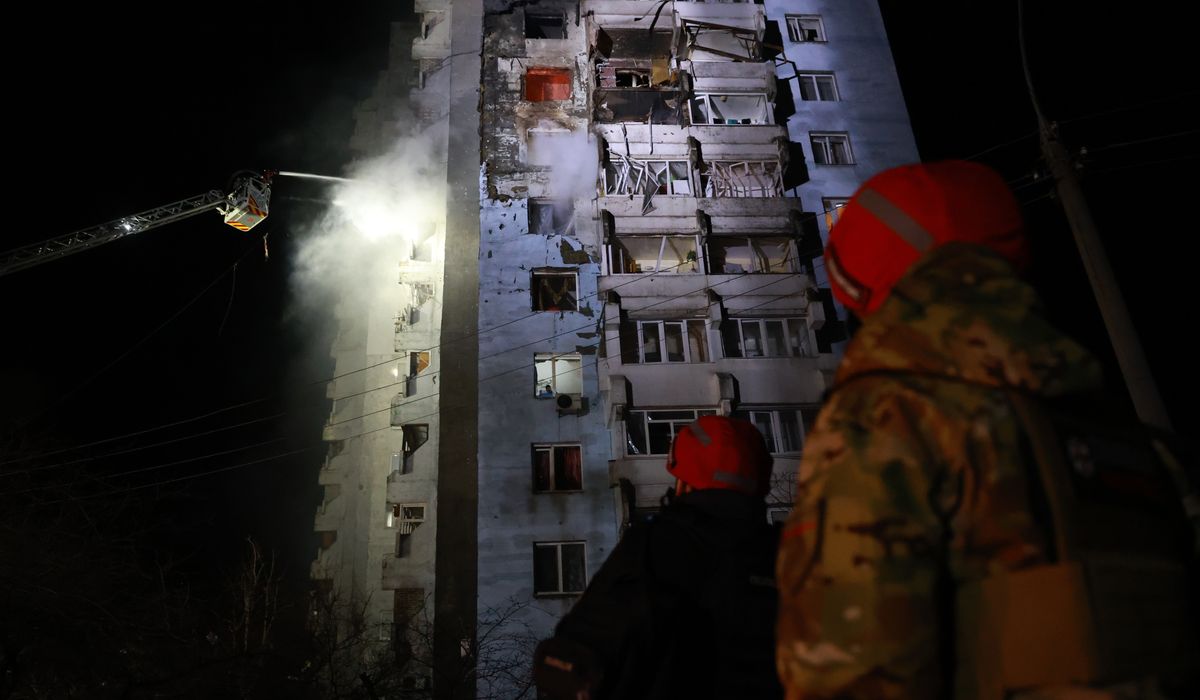
A major Russian drone and missile strike hit civilian areas in Ukraine, killing four people and injuring at least 27, officials said Tuesday. The assault coincided with new Russian efforts aimed at breaking through Ukrainian lines, heightening fears on the ground and abroad.
The attack used a combination of drones and missiles to target populated neighborhoods, creating a scene of destruction and panic. Local emergency teams reported multiple fires and damaged buildings after the strikes. Authorities scrambled to treat the wounded and account for those missing in the hours that followed.
Civilian casualties included people sheltering in homes and public places, underscoring the blunt nature of attacks that do not discriminate between military and civilian targets. Hospitals received dozens of patients with blast and shrapnel wounds, stretching medical resources in affected towns. Officials are still tallying the full human cost as rescue and recovery continue.
Ukraine’s air defenses engaged many of the incoming weapons, but the volume and variety of threats complicated the response. Some intercepts were successful, yet debris and secondary explosions still caused harm on the ground. The mix of low-flying drones and high-speed missiles is a persistent challenge for defenders.
<p”Moscow’s forces also intensified ground operations aimed at forcing breakthroughs along several sectors of the front, trying to exploit pressure points. The renewed push on land appears coordinated with the aerial campaign, putting added strain on Ukrainian defenders. Frontline commanders said they are reallocating reserves and digging in to blunt advances.
On the political front, Republican leaders and analysts have framed the strikes as proof Russia will keep pushing until it meets meaningful deterrence. They argue the response should include stronger military aid and clearer consequences to dissuade further attacks. That view stresses that weakness or delay only invites more aggression.
Residents in struck areas described a landscape of shattered glass, scorched facades and long queues for help and supplies. Community volunteers moved quickly to clear rubble and make basic repairs, showing resilience amid the chaos. Local officials warned that rebuilding and recovery will take time and resources the war has already strained.
Intelligence assessments pointed to a deliberate pattern of targeting critical infrastructure as well as civilian zones, aiming to sap morale and disrupt daily life. Analysts say this kind of campaign seeks both tactical and psychological effects, pressuring leaders and populations. Such tactics make the humanitarian toll part of the overall military strategy.
Ukraine’s military spokesman emphasized efforts to adapt air defenses and to shift logistics to reduce vulnerability. Repair teams and engineers are prioritizing power, water and medical facilities to keep essential services running. Meanwhile, military planners keep revising positions and supply lines to minimize exposure to follow-up strikes.
Across the alliance that supports Ukraine, reactions ranged from renewed pledges of assistance to calls for faster delivery of systems that can blunt aerial attacks. Republican voices in Washington highlighted the need to accelerate shipments of air defense and long-range deterrent capabilities. They framed continued support as not only moral but practical for European security.
Humanitarian groups warned that repeated strikes on civilian areas deepen an already severe displacement and aid challenge. Shelters are filling, and families face growing uncertainty about where safety can be found. Aid agencies are working to route supplies through alternate corridors to reach those in need.
As the situation evolves, military and diplomatic moves will shape whether the pattern of strikes persists or eases. Observers expect both sides to press hard in coming days, testing defenses and resolve. The coming weeks will likely reveal whether international responses change the tactical calculus on the ground.

