

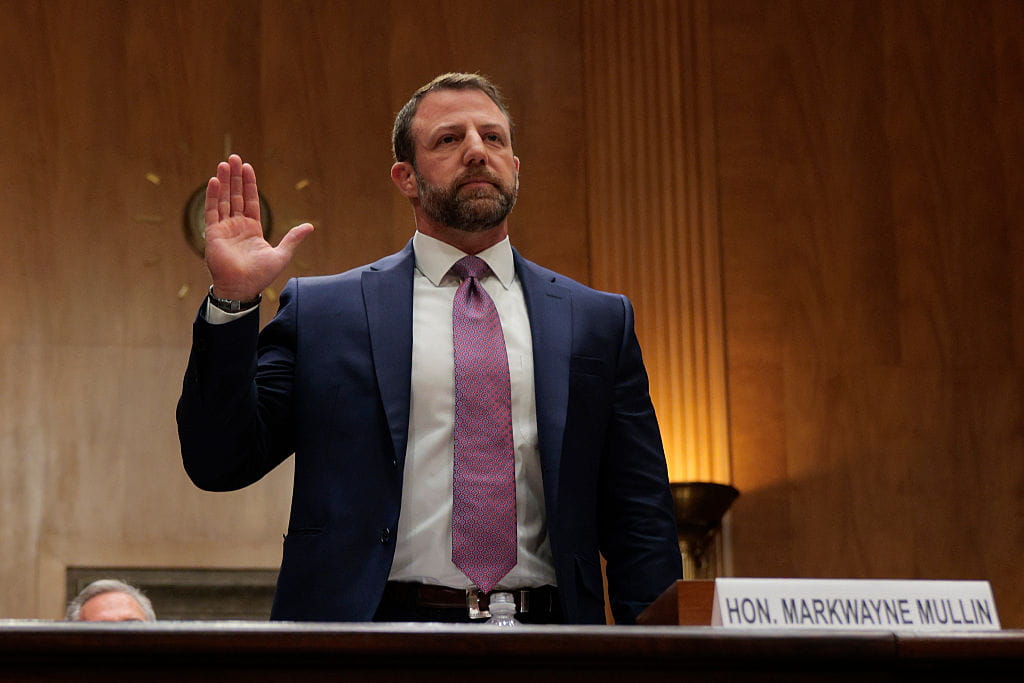
Senator Markwayne Mullin was confirmed by the Senate on the evening of March 23 to become the ninth secretary of the Department of Homeland Security (DHS), stepping into the job as US airports show growing lines and the Transportation Security Agency (TSA) struggles with a lack of funding; his confirmation signals a lean toward tougher management and accountability at a department that needs quick fixes.
Oklahoma Republican Senator Markwayne Mullin arrives with a clear mandate from fellow conservatives who want stronger border security and streamlined operations at DHS. His Senate confirmation on March 23 made him the ninth person to hold the DHS secretary role. That timing matters because the agency faces visible strain right now at airports and ports of entry.
Lines at US airports have grown longer, and travelers know it. The TSA is publicly stretched thin and struggling with a lack of funding that has cost time and confidence for millions of Americans. Republicans argue that bureaucratic inertia and misplaced priorities left TSA underresourced and unprepared for surges in travel demand.
Mullin’s confirmation comes with expectations to shake up internal management and restore basic competence. Conservatives expect him to push hiring and retention reforms, challenge bloated processes that slow screening, and reassert the chain of command inside DHS. The goal will be to make checkpoints move faster while keeping security tight.
Border enforcement will be high on his list too, and Republicans want a secretary who treats illegal entry and human smuggling as real security threats. DHS is more than TSA; it includes Customs and Border Protection, Immigration and Customs Enforcement, and other agencies that intersect with national safety. Mullin is expected to coordinate those agencies to deliver results rather than excuses.
Congressional funding debates are going to matter, and Mullin will be a practical advocate for targeted resources where they are needed most. He will likely push for funding that actually improves screening capacity and frontline staffing instead of creative accounting or vague programs. Republicans want dollars tied to measurable fixes, not open-ended promises.
Labor and civil liberties groups will push back, warning about rushed rollouts and the risk of politicization. Those concerns will play out in hearings and public exchanges, but supporters argue that decisive management beats endless study commissions. Mullin will have to balance urgent operational fixes with careful oversight to avoid new mistakes.
On cybersecurity, disaster response, and interagency coordination, DHS faces a full plate beyond airport lines. Mullin will be judged by how quickly he improves response times, secures critical infrastructure, and restores confidence among federal employees. If he moves fast on staffing, training, and clear priorities, the department could begin to look and act more like the protector Americans expect.
Expect Republican messaging to frame Mullin’s first months around measurable improvements at checkpoints and the southern border, with frequent calls for accountability. That approach aims to show voters concrete results rather than partisan talking points, and it sets the tone for how DHS will be run under a secretary confirmed to lead in a time of obvious operational strain.

