

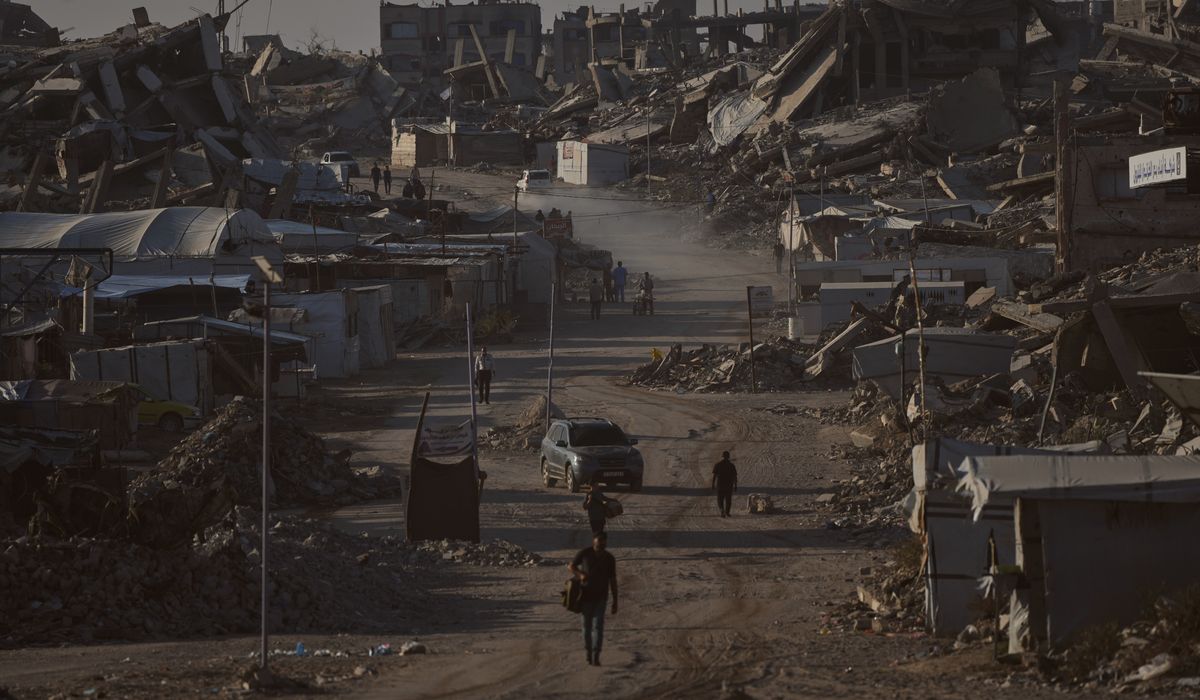
Egyptian mediators are pushing Palestinian factions to accept a technocratic committee to run Gaza without Hamas, while Hamas moved to shut down the territory’s institutions and resist outside control.
Egypt has quietly taken the lead in trying to reshape Gaza’s governance by urging Palestinian factions to back a technocratic committee that would operate independently of Hamas. That proposal is designed to remove Hamas from managerial control without attempting to erase the group, but it also risks creating a governance vacuum. Washington and its allies watch closely because any change will affect security on Israel’s border and the wider region.
Hamas’s reaction has been blunt and obstructive, undercutting the very reforms mediators want to see. The group moved to shut down the territory’s administrative functions and clamp down on dissent, showing it will not surrender its authority without a fight. That stance raises a basic question: how do you negotiate with an actor that treats governance as a monopoly and tolerates no rivals?
Republican policymakers should be skeptical of quick technocratic fixes that sideline legitimate political accountability. Technocrats can run services efficiently for a time, but they lack a democratic mandate and the force to secure long-term stability. Any plan that sidelines elected or de facto powerholders without a credible enforcement strategy is likely to fail and could leave a vacuum that extremists will exploit.
At the same time, diplomacy is not a red flag in itself. Egypt stepping in reflects regional realities and offers a pathway to reduce direct conflict spillover. But diplomacy must be backed by leverage, not wishful thinking. Pressure needs to be calibrated so that negotiators can actually change incentives for Hamas and its backers rather than simply issuing statements that have no teeth.
Humanitarian concerns will dominate coverage, and they should. Gazans need stable power, water, and medical care, and technocratic managers can help deliver those goods in the short term. Yet humanitarian delivery and political legitimacy are not interchangeable. Aid must be protected from politicization, and resources should not prop up a group that diverts services for political ends.
Security is the non-negotiable element in this debate. Israel has a right to defend its citizens and to insist that any governance arrangement in Gaza prevents attacks. That is a central Republican perspective: assistance and diplomacy must be conditioned on reductions in violence and verifiable steps to prevent terrorism. Without those guarantees, any new governing body will struggle to gain acceptance from neighboring states and from the Israeli public.
If mediators want buy-in from Palestinian factions, they must offer incentives that align with local interests while also ensuring accountability. That means clear benchmarks, transparent oversight, and consequences for violations. International actors can finance reconstruction but must tie funds to audits and credible third-party supervision that tracks where money goes and who benefits.
Hamas’s decision to shut down parts of Gaza’s institutions is proof that incentives alone will not be enough. Enforcement mechanisms matter. That could include targeted sanctions, travel bans on obstructive leaders, and coordinated action by regional partners like Egypt to isolate spoilers. These steps are uncomfortable, but they may be necessary to make a technocratic committee feasible and to protect civilians.
Republicans should push for a pragmatic blend of pressure and planning. Pressure reduces the ability of spoilers to block progress, while planning ensures that services continue and a transition does not devolve into chaos. The goal should be a durable arrangement that prevents cross-border attacks, restores basic services, and creates room for a political process that respects local aspirations and regional security.
Media narratives will inevitably focus on personalities and dramatic confrontations, but the real work is logistical and institutional. Who controls electricity, who manages border crossings, who holds payroll for hospitals and schools—these are the nuts and bolts that decide whether people feel the change. Effective transition plans must map authority, funding, and oversight down to the ministry level and make those arrangements publicly verifiable.
Finally, any external broker must be honest about limitations. Egypt can mediate and the world can fund reconstruction, but neither can indefinitely impose a solution without local cooperation or credible enforcement. Republicans should insist that U.S. involvement prioritize security guarantees, accountability for aid, and no normalization with actors who continue to sponsor terror. Real reform takes patience, leverage, and an unflinching focus on protecting civilians and allies.

