

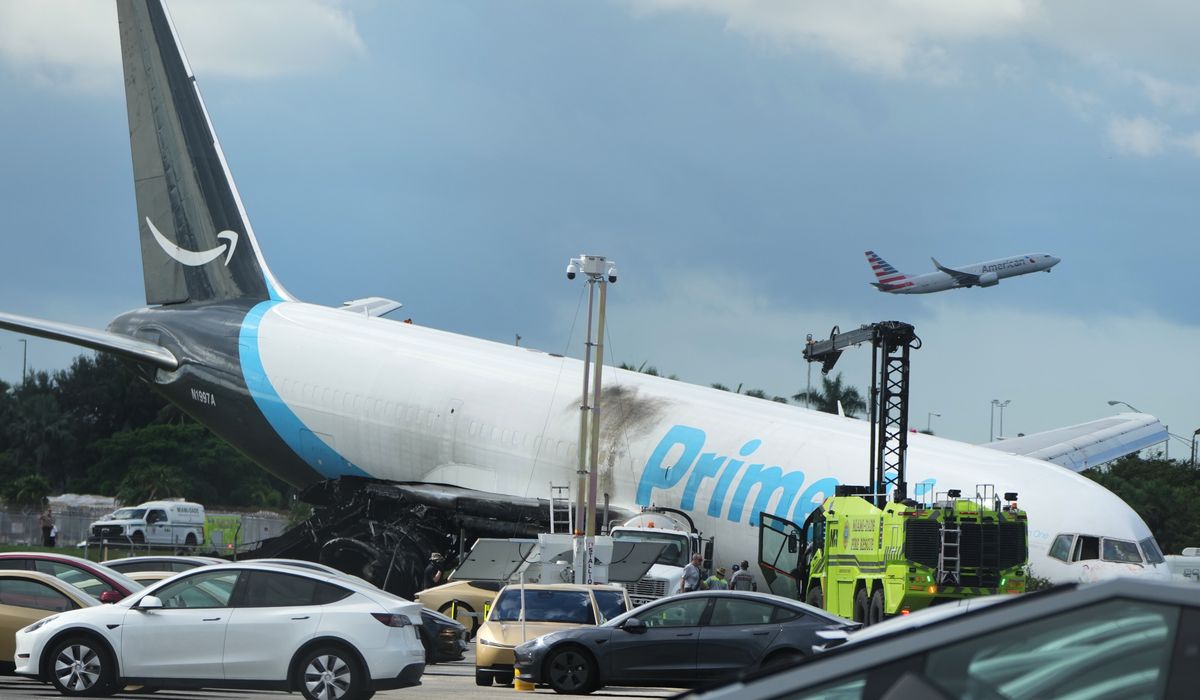
An Amazon cargo jet ran off a Miami runway and struck vehicles, killing at least five people, and federal investigators are zeroing in on the critical seconds around touchdown as they piece together what happened.
The scene at Miami International left responders scrambling and investigators with a grave set of questions to answer. Multiple vehicles were struck after the aircraft failed to stop on the runway, and officials confirmed at least five people died in the accident. Local crews worked through the wreckage while federal teams began the technical work of reconstructing the last moments of the flight.
Federal investigators typically focus on that final critical window when a landing goes wrong, and this accident will be no different. They will review flight data recorders and cockpit voice recorders to understand pilot actions and aircraft systems behavior. Those recordings usually provide the clearest picture of what changed in the seconds before a runway overrun.
Aircraft performance systems will get intense scrutiny, including brakes, spoilers, thrust reversers, and autobrake settings. If any of those systems failed or were set incorrectly, stopping distances can lengthen dramatically. Investigators will also compare the jet’s speed and touchdown point with published landing data to see if the aircraft landed long or fast.
Weather and runway conditions are immediate, testable factors investigators examine. Rain, standing water, or crosswinds can reduce braking effectiveness and complicate pilot control during landing. Runway surface condition reports and airport maintenance logs will help determine whether contamination or poor friction readings contributed to the overrun.
Human factors are another major piece of the puzzle, so investigators will look at crew experience, fatigue, training records, and any possible distractions in the cockpit. Air traffic control communications and approach clearances will be reviewed to confirm what the crew was told and when. If the crew received any warnings or alerts, the timing and response to those warnings will be central to the timeline investigators construct.
Maintenance history and recent repairs on the aircraft will be checked to rule out mechanical causes that might not be obvious at the scene. Investigators will analyze maintenance logs, recent inspections, and any deferred maintenance items that could have impacted systems involved in stopping the airplane. If a component showed signs of malfunction, forensic examination will determine whether it failed before or as a result of the impact.
Scene evidence, including skid marks, gouges, and the final resting position of the jet, will be photographed and mapped to reconstruct the path off the runway. Eyewitness statements and surveillance video from the airport perimeter add context but must be matched to instrument-derived data. That combined evidence helps determine whether the aircraft decelerated as expected or if something anomalous occurred.
Investigators also study emergency response timelines to assess how quickly fire and rescue teams reached victims and suppressed fires. That review does not determine causation but can influence safety recommendations on airport emergency planning and access. Lessons learned from those reviews often lead to procedural changes at airports and improvements in responder coordination.
Once the investigators compile initial findings, they will release factual reports outlining the timeline and data without speculation. It can take months for a full investigative report to be completed, and interim updates may provide technical details as tests and analyses conclude. Meanwhile, authorities continue to manage the human side of the disaster, including notifications and community support for those affected.

