

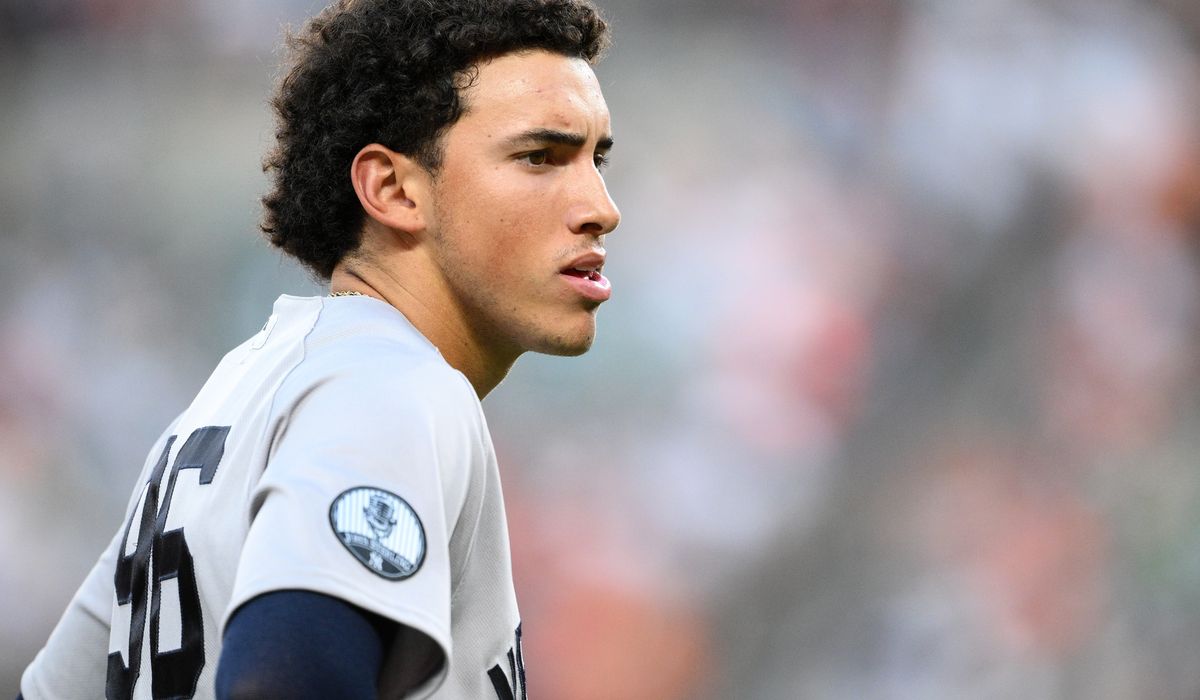
George Lombard Jr.’s rookie campaign has swung from a headline-making debut to a stretch of defensive miscues, creating a season of clear highs and visible growing pains for the New York Yankees’ shortstop.
George Lombard Jr. arrived in pinstripes with instant impact, blasting a home run in his first major league at-bat and becoming the first Yankees shortstop to do so. That moment announced a bat with power and a player who can handle the spotlight. Since then, his season has tilted toward defensive struggles that have drawn attention from fans and analysts alike.
The homer in his debut was the kind of instant highlight that flips a rookie into a household name overnight. It showed raw power and the feel for the barrel that every club covets at shortstop. That offensive promise gives the Yankees a reason to stay invested while he works through rough patches on defense.
Defensive miscues are part of the narrative now, and they have been happening in clusters rather than as an occasional blemish. Ground balls that would normally be routine have turned into errors or late throws a few times, and those plays stick in replay and back pages. For rookies, timing and anticipation are skills built over weeks of game reps, and those reps sometimes come with mistakes.
New York is a pressure cooker, and the shortstop spot is not forgiving for repeated mistakes. Managers and infield coaches will usually respond with extra sessions, simple repetitions, and positioning adjustments. Those tools help correct footwork and transfer mechanics, which are often the mechanics behind miscues rather than a lack of effort.
Trust from the pitching staff matters too; a shortstop who makes routine plays gives pitchers confidence to attack the zone. When miscues creep in, pitchers may nibble more and rely on strikeouts, changing the rhythm of the staff. The Yankees will be weighing whether Lombard’s bat and upside offset intermittent defensive lapses when crafting game plans.
Mental resilience becomes as important as physical correction in these moments. Playing every day in New York ramps up scrutiny, and a player who can compartmentalize will usually bounce back faster. Veterans frequently point to film study and breathing techniques as practical steps for younger players dealing with extended slumps or streaks of errors.
On the roster front, the club always has options: internal depth can be used, and lineups can be shuffled to reduce exposure in high-leverage defensive situations. That does not mean benching a rookie indefinitely, but it does create a push-and-pull between development and winning. Maintaining a balance between protecting a young player’s confidence and protecting the club’s immediate needs is a daily managerial decision.
Lombard’s path forward will be shaped by consistent reps at shortstop paired with targeted coaching. Drill work that isolates footwork, angle of approach, and throw accuracy will be standard fare. Those micro-adjustments often make a big difference once the game speed returns to routine for a young defender.
Offensively, the moment in his debut proves he has legitimate power potential and the ability to impact a game with one swing. That accountability with the bat buys time for defensive growth, because clubs are generally willing to tolerate growing pains from contributors who change the scoreboard. Managers will likely give priority to at-bats and plate appearances while the defense is under refinement.
Fans and media in New York tend to react fast, and the narrative can swing from praise to criticism in a matter of days. A single defensive play replayed on loop can overshadow a week of solid at-bats, which is why perspective matters. In a season that started with a historic homer and has included key errors, patience and process are the elements most often cited by development staff.
Looking ahead, the practical watch points are straightforward: fewer throwing errors, cleaner exchanges, and more consistent footwork on routine ground balls. Those measurable improvements signal that coaching is taking hold and that a rookie is adjusting to the speed of the major leagues. The next stretch of games will tell whether this run of miscues was a temporary dip or part of a longer learning curve for a promising young shortstop.

