

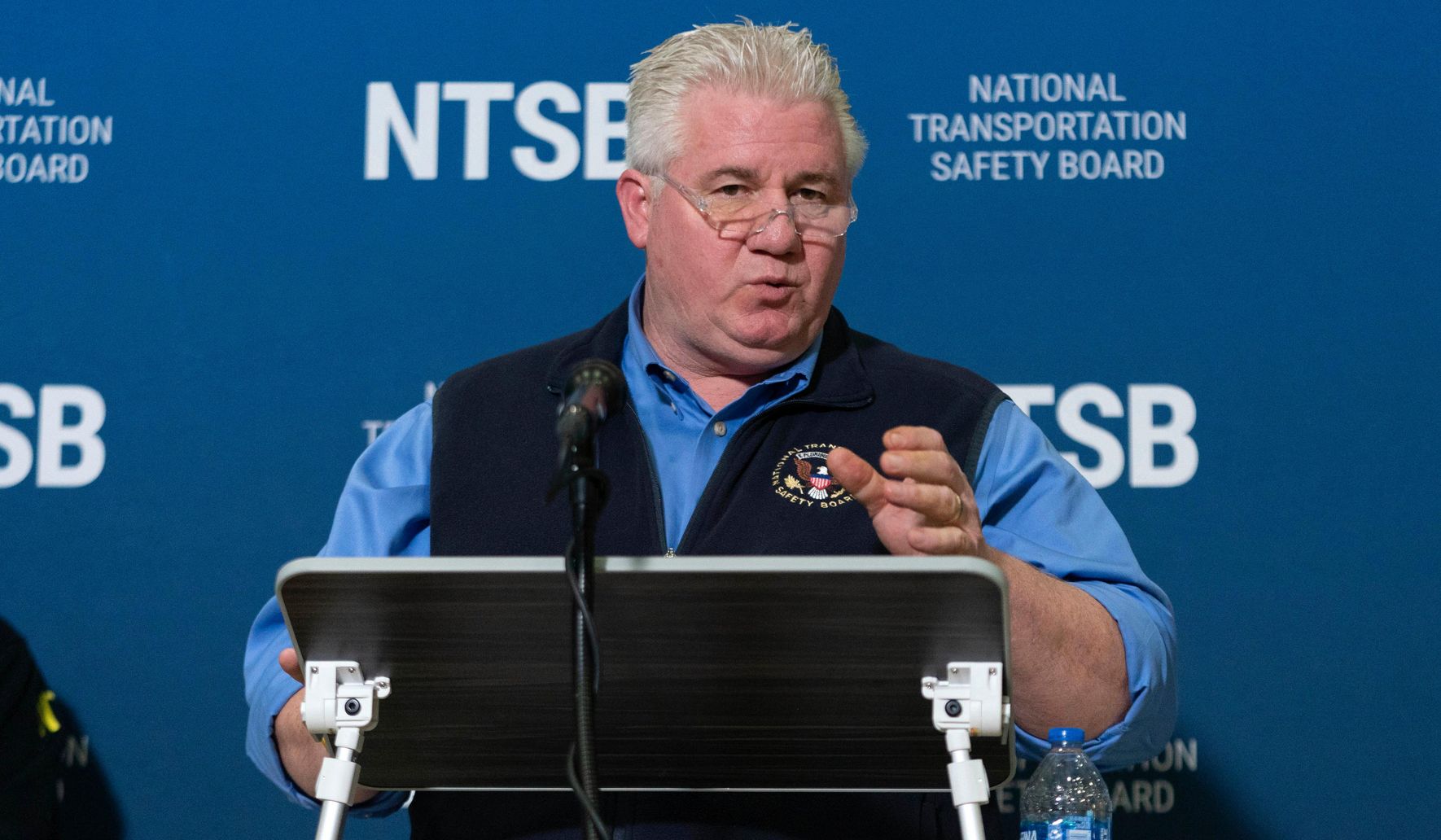
An NTSB member who served as the public face of last year’s investigation into the deadly collision between an airliner and an Army helicopter near the nation’s capital has remained central as the agency moves through technical reviews, public briefings, and the path toward safety recommendations.
The midair collision last year claimed lives and raised immediate questions about how civilian and military flights share airspace near the capital. Local and federal officials treated the accident as a high priority, and the National Transportation Safety Board took charge of the technical probe. That effort included on-scene examinations and long hours of evidence collection.
The NTSB member in question became the visible point of contact for press briefings and family updates, a role that requires translating complex aviation findings into plain language. Part of the job is explaining how investigators reconstruct events from fragmented data without drawing premature conclusions. The public face of an investigation often balances transparency with the discipline needed during a methodical probe.
Investigators have focused on flight path analysis, radar and air traffic control records, maintenance logs, and cockpit voice and data records when available. Wreckage mapping and systems examinations help determine if mechanical issues contributed to the collision. Human factors, including crew actions and communications, are also central to building a timeline of what happened.
Coordinating evidence from multiple agencies is a significant part of the job, especially when the crash involves both civil and military aircraft. The NTSB normally leads technical fact-finding while other agencies may examine regulatory or criminal angles. That layered approach can slow public disclosures but aims to produce a robust final report.
Public briefings conveyed by the NTSB member helped families, industry stakeholders, and the public follow the investigation without speculation. Those briefings emphasize what is known and what remains under analysis, which is crucial to maintaining confidence in the process. Clear communication is also necessary to manage misinformation that can arise after high-profile accidents.
When the NTSB completes its investigation it will typically issue findings and recommendations meant to prevent similar accidents in the future. Those recommendations may target air traffic procedures, equipment upgrades, training standards, or coordination between military and civilian operators. The board’s recommendations are influential, even though implementing them falls to regulators and industry partners.
The collision highlighted ongoing challenges in managing mixed-use airspace near major cities, where training flights, military operations, and commercial traffic intersect. Some aviation professionals say improvements in surveillance, required transponder use, or updated airspace rules could reduce risk. Others point to the need for clearer communication protocols between controllers and pilots operating in complex environments.
The aviation community, including airlines, military units, and air traffic controllers, has watched the NTSB’s work closely and prepared to respond to any recommended changes. Industry stakeholders often begin voluntary reviews of practices while waiting for formal guidance, aiming to shore up safety wherever gaps are suspected. Those proactive steps can shorten the time it takes to adopt important fixes.
Families affected by the crash continue to seek answers, and investigators have acknowledged the human toll throughout the process. Memorials and private remembrances have been held while officials work through technical issues that may take months to finalize. As the NTSB moves toward a final report and possible safety recommendations, attention will remain on preventing another tragedy in the same airspace.

