

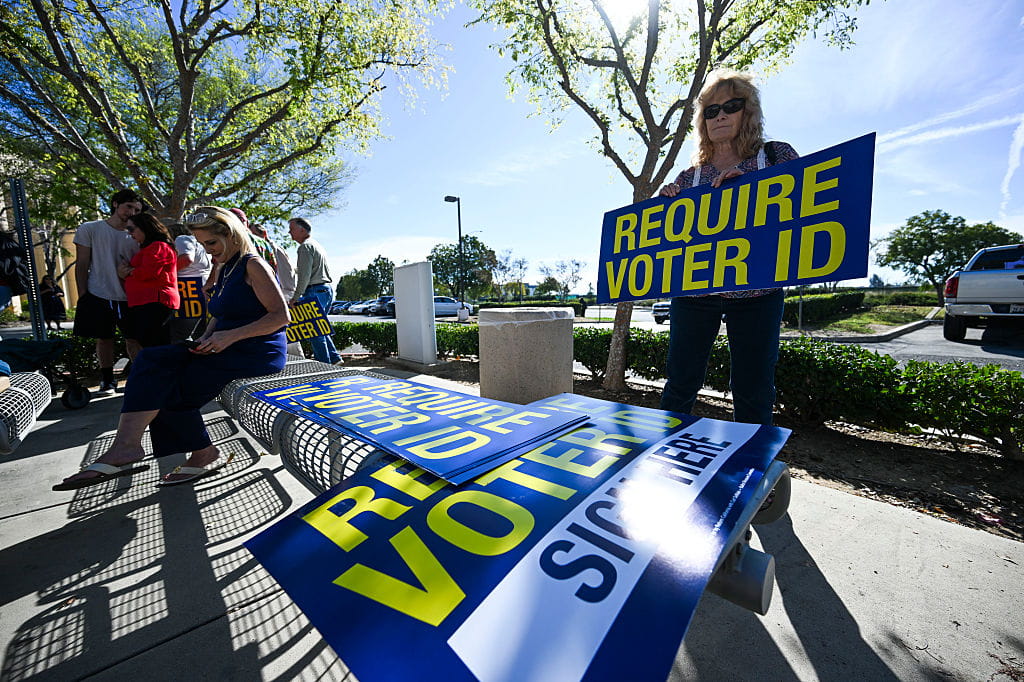
The debate over the SAVE America Act has turned into a messy tug-of-war between election integrity and sweeping federal rules, with both sides talking past each other while voters watch.
Talk about voting rules has exploded into national headlines, and the SAVE America Act sits at the center of that noise. On one side are calls for straightforward requirements like voter ID and proof of U.S. citizenship to ensure ballots are cast only by eligible voters. On the other side are arguments focused on access and turnout that often resist tightening verification rules.
Republicans pushing for the SAVE America Act make a clear, simple case: elections matter only if the people voting are legally entitled to do so. That means asking for ID and a citizenship check when someone registers and when they vote. These are basic safeguards, not grand experiments in limiting participation, and they align with common-sense expectations most Americans already accept in other parts of civic life.
Critics warn that new rules could suppress turnout, especially among marginalized communities, and raise concerns about administrative burdens. Those are legitimate worries that deserve careful handling, but they don’t excuse ignoring the hard truth that weak verification systems leave room for mistakes and exploitation. The debate ought to be about how to secure rolls and ballots without making it harder for lawful voters to participate.
Implementing voter ID and citizenship checks doesn’t have to mean long lines or denied ballots; it means providing clear, accessible ways to comply. States that require IDs for other everyday transactions can offer free, easy-to-obtain credentials for voting purposes. Mobile units, extended hours, and online pre-verification are practical steps that protect both access and accuracy without surrendering control of the process to bad actors.
Another tension in the debate is federal versus state authority. Many Republicans prefer state-level fixes that respect local control and election diversity. At the same time, when fraud or error crosses state lines or when federal standards are needed to restore public confidence, national measures become necessary. The conversation should include a balanced approach: protect local innovation while ensuring minimum nationwide safeguards.
Media narratives often simplify the issue into two extremes, which is unhelpful and misleading. One side paints any verification as voter suppression, while the other portrays resistance as a concession to fraud. Neither caricature helps voters or officials who must actually run elections. Honest discussion requires admitting both the need for secure systems and the obligation to remove unnecessary barriers.
Lawmakers who support the SAVE America Act show voters they take election integrity seriously, and they must do so with transparency. Auditable systems, public reporting, and clear procedures for resolving disputes are all part of building trust. When election rules are open and verifiable, the public is more likely to accept outcomes, even when individual races are close or contentious.
Opponents often focus on the potential for administrative hiccups, and those concerns should push legislators to craft practical implementation language. Funding for upgrades, training for election officials, and provisions to prevent unintentional disenfranchisement are necessary parts of any responsible reform. A bill that only looks good on paper but fails at the clerk’s office does more harm than good.
The SAVE America Act debate is about more than politics; it’s about how we preserve faith in the democratic process. Protecting ballots and voters at the same time is a solvable challenge if leaders are willing to blend common-sense verification with smart, well-funded execution. Voters deserve elections they can trust, run by officials committed to both security and access.

